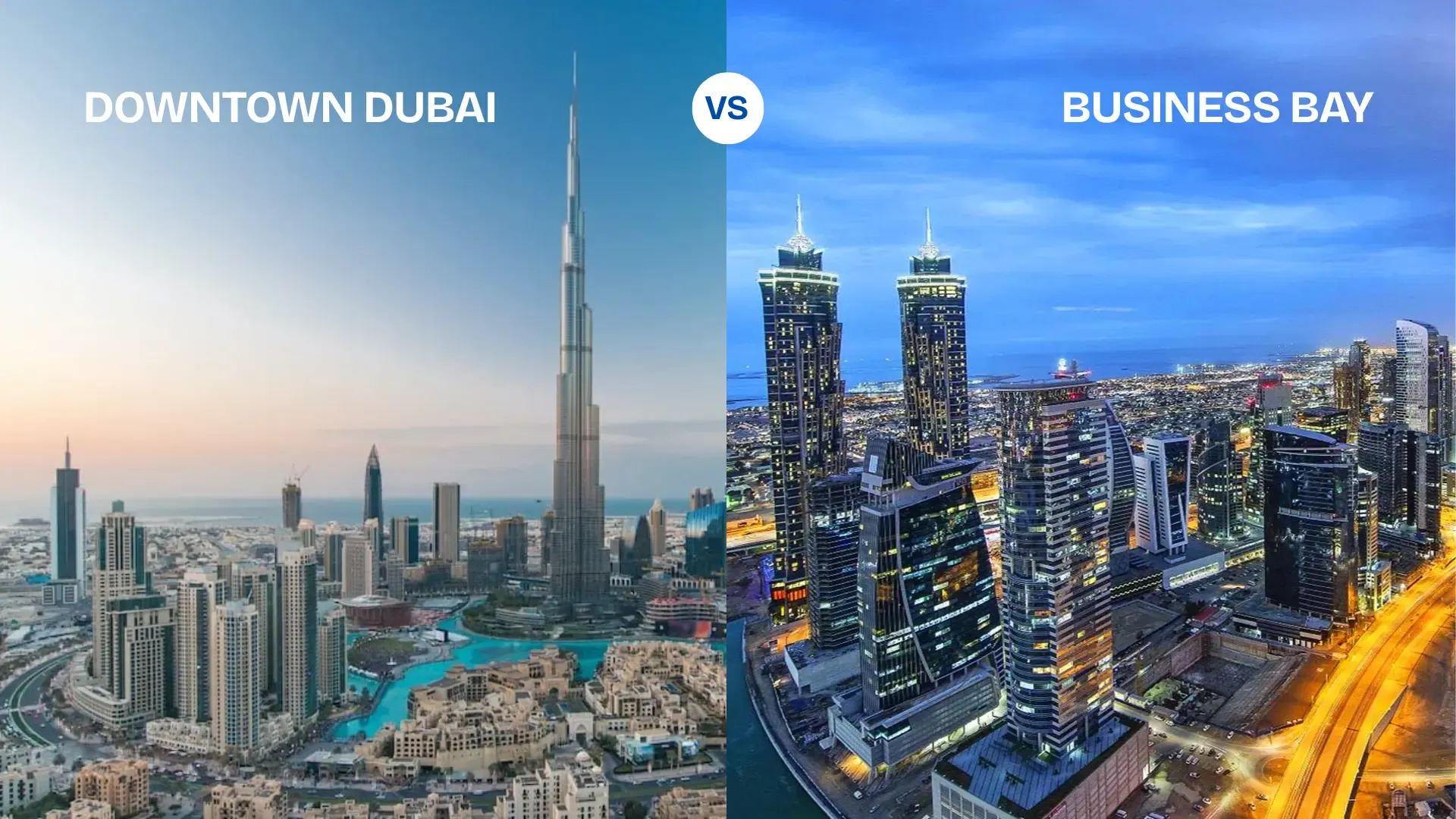

A 397 AED per square foot price gap separates Dubai's two most prominent central districts as of mid-2026. Official Dubai Land Department (DLD) transaction data shows real estate in Downtown Dubai trading at an average of 3,010 AED per square foot, while neighboring Business Bay offers an entry point of 2,613 AED per square foot. That gap is really a choice between the premium status of the world's tallest tower and the higher cash-on-cash returns you'll find along the canal.
Deciding between downtown dubai vs business bay comes down to your timeline, your rental strategy, and your daily commute.
The 2026 Market Overview
The border between these two high-density neighborhoods has blurred into a single urban corridor, though their real estate fundamentals stay distinct. Downtown Dubai is a fully established global destination, and new construction space there is nearly exhausted, so the district leans on capital preservation and secondary market luxury trading. Recent ValuStrat price indices show the area nearing full build-out , little room for new master developments, but high asset liquidity and long-term security.
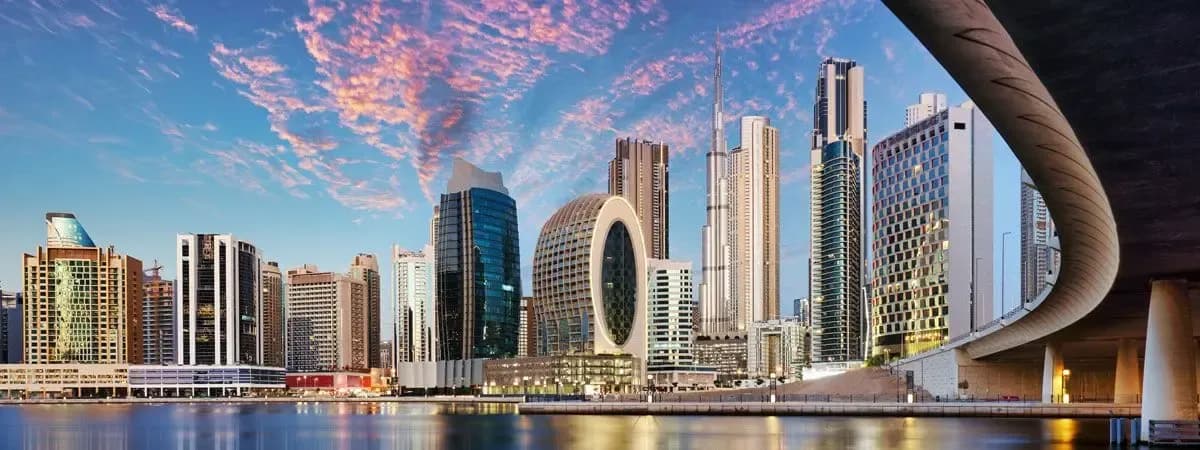
Business Bay, by contrast, is in its final major wave of waterfront development. It's moved well past its old reputation as a purely commercial office district: the expansion of the Dubai Canal promenade and Marasi Drive has turned it into a hub for luxury branded residences. RERA data shows a higher volume of off-plan launches here than in Downtown, giving buyers access to phased construction payment plans. Downtown tends to appeal to international buyers after a long-term store of value, while Business Bay draws private portfolios looking to maximize yield through active rental management.
To understand how these central districts fit into the broader citywide property landscape, explore our comprehensive Dubai real estate investment 2026 analysis.
Property Prices & ROI: Where Do Investors Win?
The data on the transactions from the first half of 2026 clearly demonstrates the financial differences between the two communities. When thinking about investing in downtown dubai or business bay, investors must choose either cash flow or value appreciation.
Price per square foot
Downtown: based on data from the DLD, the prices of properties in downtown dubai 2026 are in a high-price category. Older residential towers built before 2012 trade between 1,500 AED and 2,200 AED per square foot, while modern structures and premium sectors like the Opera District command 3,000 AED to 5,000 AED per square foot. Units with an unobstructed Burj Khalifa view regularly exceed 6,000 AED per square foot.
Business Bay looks different. Ready apartments trade in a typical range of 1,850 AED to 2,100 AED per square foot, and new off-plan projects launched in 2026 enter the market between 1,950 AED and 2,300 AED per square foot. Premium waterfront plots along Marasi Drive or ultra-luxury branded towers do cross the 3,500 AED per square foot mark, but the average entry point across the community is still notably more accessible than its northern neighbor.
Rental yield and short-term performance
The lower purchase price in the canal district is a big part of the business bay rental yield advantage. Gross residential yields there consistently run 5.5% to 7%, and well-positioned 1-bedroom apartments often hit net yields between 7.6% and 8.4%. Downtown Dubai yields run lower because of the higher capital entry cost, typically 5% to 6%, though Downtown tends to deliver higher absolute monthly rental checks and holds up better during broader market corrections.
Average Price & Yield Comparison (Mid-2026 Data)

For operators running short-term rentals and Airbnb management, Business Bay shows a 25% revenue premium over traditional annual leases. A standard 1-bedroom apartment in DAMAC Towers can generate 120,000 AED to 145,000 AED annually through short-term holiday platforms, compared to 85,000 AED to 95,000 AED for a long-term rental. Ultra-premium options like The Opus Residences command daily rates up to 1,200 AED during peak tourist months, which lets investors recoup capital faster than typical Downtown properties.
Lifestyle & Amenities: Dubai Mall Prestige vs the Canal Vibe
Living in business bay vs downtown comes down to choosing between an organized, landmark-centric environment and a dynamic, waterfront lifestyle.
Downtown Dubai, institutional prestige Downtown is designed around pedestrian convenience and global tourism. Wide walkways along Sheikh Mohammed bin Rashid Boulevard are lined with over 200 retail outlets and homegrown dining options, and residents get direct access to the Dubai Mall, the Dubai Fountain, and cultural performances at the Dubai Opera. The residential towers, developed mostly by Emaar Properties, come with standardized management, concierge services, and dedicated community parks, though living here does mean dealing with tourist crowds on weekends and holidays, and visitors will find public parking limited.
To view available premium listings in this district, browse our curated collection of properties in Downtown Dubai.
Business Bay, active waterfront infrastructure Business Bay offers a lifestyle centered around fitness, outdoor recreation, and urban convenience. The neighborhood is anchored by the 12-kilometer Dubai Canal boardwalk, with running tracks, cycling lanes, floating architectural villas, and multiple water transport stations. The residential profile is diverse, mixing towers from various private developers with luxury branded residences, and it's a genuinely mixed-use neighborhood where a residential skyscraper often sits right next to a commercial office building, popular with single professionals and corporate executives who'd rather walk or bike to work.
Connectivity and Commute: Which Area Has Better Infrastructure?
Both neighborhoods sit next to Dubai's main transit artery, Sheikh Zayed Road, but their internal traffic dynamics differ.
Business Bay used to have significant traffic congestion, driven by its dense concentration of office buildings. The Internal Road Improvement project addressed that by adding new entry and exit lanes connecting the community directly to Al Khail Road, cutting travel times to the Dubai International Financial Centre (DIFC) and easing bottlenecks during peak hours.
Commute and transit access
Downtown Dubai:
- Internal roads: wide boulevards, slow-moving loops
- Highway access: direct to Sheikh Zayed Road, complex access to Al Khail
- Metro: connected via a long, air-conditioned pedestrian bridge
Business Bay:
- Internal roads: high-density grid, streamlined multi-lane layout
- Highway access: multiple direct exits to both Sheikh Zayed and Al Khail Road
- Metro: walkable, ground-level station access across central sectors
Downtown Dubai's grand, multi-lane boulevards handle daily local traffic well, but the district can see serious gridlock during major shopping sales, weekend fountain shows, or national holidays, when traffic near the mall access ramps backs up for extended periods.
For public transit users, the Downtown metro station means walking through that long enclosed bridge to reach the mall and nearby towers. In Business Bay, the metro is accessible directly at street level, keeping walk times under seven minutes for most central towers. Planning announcements for the upcoming Dubai Blue Line transit hubs have already pushed a 10% to 12% price increase for properties near these future stations.
Torn between the prestige of Downtown and the high yields of Business Bay? Our Kun Real Estate area specialists offer free WhatsApp consultations, no obligation.
The Final Verdict: Which Area Should You Choose?
The decision between business bay vs downtown dubai shouldn't be about finding a superior neighborhood, it's about matching an asset to your financial strategy and lifestyle priorities.
Choose Downtown Dubai if:
- Your main financial target is long-term capital preservation and stable asset protection
- You want a mature, predictable neighborhood managed by major developers like Emaar
- Your lifestyle relies on being within walking distance of high-end retail, fine dining, and cultural venues
- You want maximum asset liquidity when reselling on the secondary market
Choose Business Bay if:
- You want to maximize your immediate cash flow and achieve a higher annual rental yield
- You want to focus your portfolio on active short-term rentals and Airbnb leasing
- You prefer flexible payment structures on off-plan projects from diverse private developers
- You prefer an active lifestyle centered around outdoor fitness, waterfront boardwalks, and direct highway connectivity
To compare how these two neighborhoods stack up against long-term master-planned villa developments, read our detailed review of Business Bay.
FAQ’S
Which area offers higher rental returns, Downtown Dubai or Business Bay?
Business Bay consistently delivers higher gross and net rental yields, with standard 1-bedroom apartments returning between 6.5% and 8%. Downtown Dubai yields run lower, averaging 5% to 6%, because the initial purchase costs are much higher.
What is the price difference per square foot between the two areas?
As of mid-2026, DLD transaction data shows Downtown Dubai averaging 3,010 AED per square foot, with premium towers regularly exceeding 5,000 AED. Business Bay has a lower average entry point of 2,613 AED per square foot, which makes it an attractive value alternative.
How has the Dubai Blue Line affected property values in Business Bay?
The planned Dubai Blue Line transit hubs have already stirred up investor demand, pushing an immediate 10% to 12% price increase for residential towers within walking distance of the planned transit access points.
Are short-term rentals more profitable in Downtown or Business Bay?
Business Bay delivers higher net profits for short-term holiday homes because of its lower initial purchase prices. Modern towers there generate a 25% revenue premium over long-term leasing, drawing corporate travelers and tourists who want close access to Downtown landmarks.