
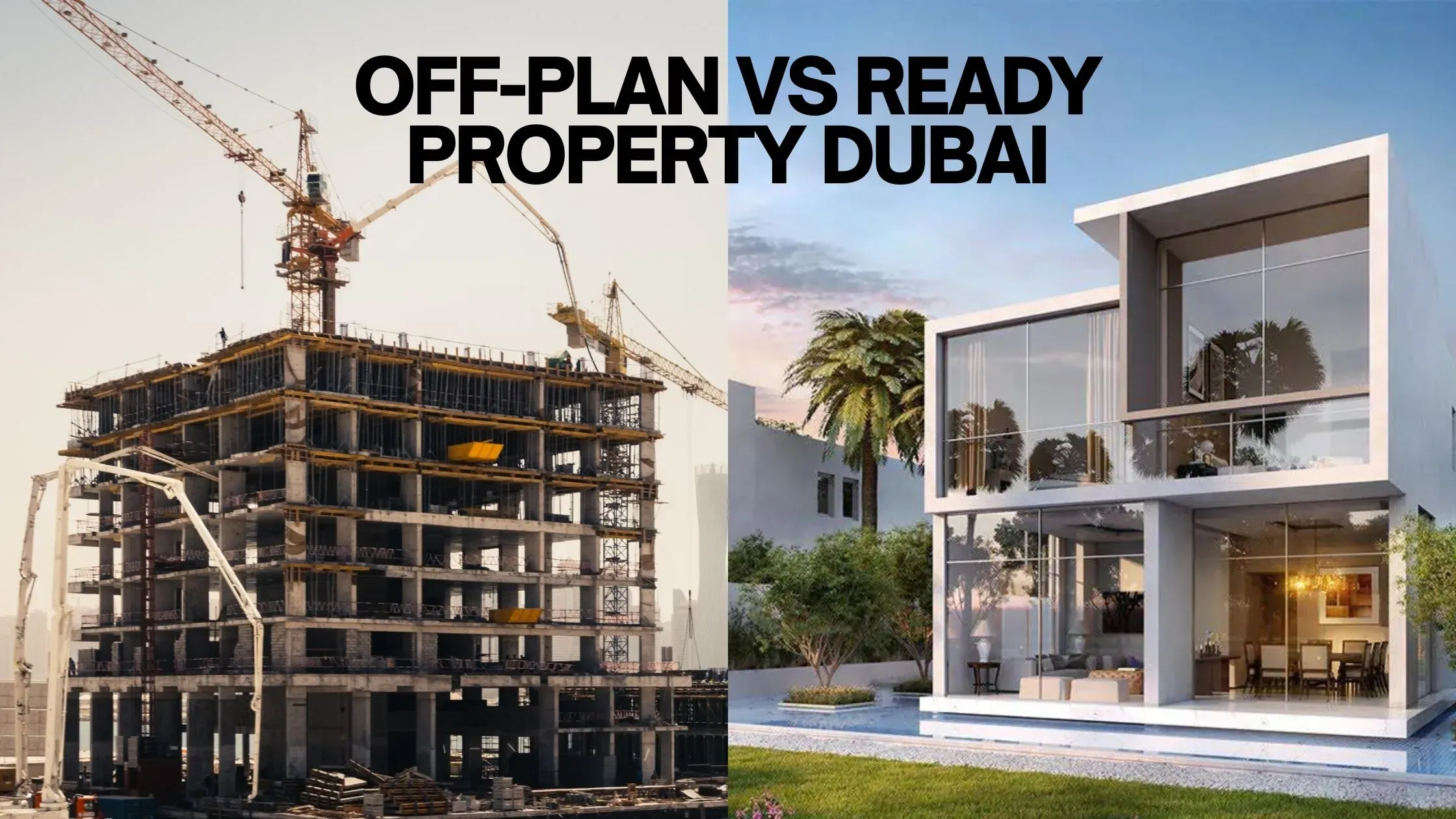

Off-plan transactions captured 72% of Dubai’s residential real estate market, according to official data published by the Dubai Land Department (DLD). This structural dominance leaves many individual buyers facing a critical financial dilemma: is it safer to buy a property still on the drawing board, or one where you can turn the key today? Comparing off plan and ready properties in Dubai, it’s not just about what’s in the marketing brochures, but also the hard economic numbers, regulatory protections, and personal capital limitations. Investing in the wrong asset class can lock up your liquidity for years or even cause you to miss out on capital growth. This guide offers you a brief overview of the financial realities, risks and regulatory frameworks for both segments in 2026 to help you in your decision-making process and ensure that you choose options that meet your financial goals
What is Off Plan Property in Dubai?
An off-plan property is a residential or commercial unit bought directly from a developer before its construction or at the construction phase. When you buy off-plan, you’re buying a contractual right to a future property based on the architectural blueprints, floor plans and a specific master community layout.

The process of buying off-plan is highly structured in Dubai’s Freehold Zones. Transactions are carried out through a Sale and Purchase Agreement (SPA) with the Dubai Land Department’s (DLD) Oqood, the temporary registration system, which safeguards the rights of the buyer until the property is fully built. The interim registration becomes a permanent title registration when the project is deemed to be practically complete and inspected.
The Case for Off-Plan: 5 reasons investors choose it
The main driver of the enormous volume of primary market deals in early 2026 is the financial accessibility and growth potential within the off-plan ecosystem. If you’re looking at how to invest in Dubai property 2026, off-plan assets offer particular strategic benefits.
1. Flexible Developer Payment Plans
Off-plan purchases are supported by flexible developer payment plans not available in the secondary market transactions that require a large amount of liquidity upfront. During construction, these can be 50/50 or 60/40, or post-handover payment terms. Buyers are able to enter the market with a down payment as low as 5% to 10%, with the remaining sums spread over milestones directly linked to construction progress.
2. High Capital Appreciation Potential
Buying at the initial launch stage provides a built-in pricing advantage. According to Knight Frank’s research, high-end master communities like Dubai Creek Harbour or premium villa projects in Damac Lagoons have seen capital appreciation of 8%-12% from launch to mid-construction alone. The investors who buy in at the absolute baseline cost are building up equity as the construction happens.
3. Reducing Financial Barriers to Residency
Dubai’s legal framework has developed significantly to enable mid-market investors to access it. Following the April 2026 visa reforms, the Central Bank of the UAE and the immigration authorities removed the AED 750,000 minimum equity barrier for the 2-year investor visa. Off plan Dubai 2026 is now available for purchase by buyers who can secure immediate residency rights for cheaper off plan studio and one bedroom units in developing sub-markets based on their SPA value.
4. Brand new infrastructure and customisation
Buy direct from a developer and you’re purchasing a property built to the most recent standards of environmental sustainability, building codes and architectural aesthetics. Also, branded residences, commanding a 25% to 30% premium over non-branded equivalents according to CBRE data, give early buyers a chance to customize internal layouts, finishes and material selections.
5. Lower Initial Regulatory and Transaction Fees
While the standard 4% DLD fees apply to both segments, developers frequently offer promotions during launch events where they waive 50% to 100% of these administrative costs.Furthermore, off-plan buyers completely avoid agency commissions (typically 2%) and valuation fees required by mortgage lenders on completed properties.
The Case for Ready Property:
When It Makes More Sense While buying at launch has its benefits, secondary market properties continue to be the foundation of low-risk, immediate-utility strategies. For those who prefer cash flow stability instead of speculative growth in the future, the benefits of available property in Dubai must be understood.

1. Immediate Income From Rental Yield
The most important advantage of completed property is the instant cash flow it provides. According to the CBRE Dubai Residential Market Report, Dubai’s average gross rental yield stands at 6.76%, a stark contrast to established global property markets like London (2%–4%) and New York (3%–5%). Investors who want to immediately cover financing costs can find a tenant for a ready unit in a matter of weeks after closing the deal.
2.Eliminating the Risk of Handover Delays
Construction timelines can be uncertain even under strict regulations. Historically, only 48% to 60% of the expected residential supply in Dubai comes on time, with the rest facing either minor or major construction delays.Buying a ready property eliminates off plan risks Dubai such as postponed move-in dates, developer insolvencies, or deviations from the original marketing floor plans.
3. Concrete Assessment of the Asset and Community
When buying units in the secondary market, you get what you see. You can physically audit the quality of the finishes, check the view, check the standards of maintenance of the common areas and check for the actual service charge rates being charged by the owners’ association. You can also check on the maturity of the surrounding infrastructure, roads, schools and retail access
4. Instant Golden Visa Eligibility
For the affluent looking for long-term stability, buying a ready property valued at AED 2 million and above grants instant eligibility for the prestigious 10-year UAE Golden Visa. Unlike off-plan properties where you may require specific construction milestones to be cleared for visa approvals, ready property allows you to secure your physical title deed and submit your residency applications within days of transaction completion.
5. Speak With a Kun Real Estate Advisor
Got questions about whether to buy off-plan or ready property? Our Kun Real Estate experts offer free WhatsApp consultations, no obligation. Connect with our RERA-licensed advisors on WhatsApp now.
Which Should You Choose?
The best choice depends entirely on your financial profile, risk appetite and investment horizon. Neither asset class is better, it is simply a case of which strategy best suits your current portfolio.
Choose Off-Plan Property If:
- You want maximum capital growth: You want to target high growth master developments and capitalise on the uplift in value from project launch to handover. Read more in our in-depth guide to Dubai off-plan property.
- You want flexible cash flow management: You want to spread your acquisition costs over a number of years avoiding immediate mortgage liabilities or high interest costs. You want modern assets: You want contemporary interior layouts, smart-home integration, energy-efficient appliances and new community amenities.
Choose Ready Property When:
- Your main goal is predictable yield: You are looking for the highest immediate cash-on-cash returns to boost your income or service your debt.
- You are a lifestyle buyer seeking immediate accommodation: You are moving to Dubai or have to move your family immediately, without the hassle of the rental market or waiting for construction to be completed.
- You are risk-averse to development: you want to mitigate the risk of potential delays in delivery and like to see the physical asset before you pay. For more macroeconomic insights that can influence such decisions see our report on Dubai real estate investment 2026.
FAQs
1. What are the legal protections if an off-plan developer defaults?
Under RERA Law No.8 of 2007, developers are required to deposit all payments received from buyers into a project specific escrow account. Only when verified construction milestones are met, the funds in this account can be released. In addition, the trustees of the account are required to keep a retention fund of 5% for one year after the property is handed over to cover any structural defects. This provides good financial protections should the developer go insolvent.
2. Can I resell an off-plan property before it is completed?
Yes, most developers allow buyers to resell their off-plan units on the secondary market once they have paid a certain percentage of the overall value of the property, usually between 30% and 40%. The new buyer then takes over the existing SPA and the remaining payment plan milestones.
3.How much cash do I need upfront to buy a ready property?
To buy a ready property with a mortgage, you’ll need around 25% to 34% of the purchase price upfront. This includes a 20% down payment required by the Central Bank for expats, a 4% Dubai Land Department fee, 2% real estate agency commission, and minor administrative, registration and bank valuation fees.
4.Are rental yields higher for off-plan or ready properties?
Ready properties can be rented out immediately and have a rental rate based on the current market. Off-plan properties don’t generate income during construction but tend to have higher net rental yields after handover because of its lower launch price, and the premium rent it can achieve thanks to its modern facilities.
5. How do service charges differ between off-plan and ready properties?
Service charges for ready properties are historical and managed by an elected homeowners’ association. Off-plan properties have estimated service charges from the developer during sales, but final rates are subject to formal audit and approval by the Dubai Land Department once the building is occupied.
6. Can I get a mortgage on an off-plan property in Dubai?
Yes, but the criteria are tougher than for ready properties. Banks in the UAE will finance off-plan properties, but usually only for projects by top-tier developers that are approved by RERA. The loan-to-value ratio is also usually lower and buyers will have to pay the initial construction milestones out of their own pocket before banks start disbursing.
7. Looking to buy your next property in Dubai?
Whether you want to secure a flexible payment plan for an upcoming launch or buy an income-generating asset that’s ready to go, you need objective, data-driven advice to navigate the market.Browse Premium Units: Explore Our Curated Property Portfolios Get Instant Expert Input: Message a Licensed Kun Real Estate Consultant on WhatsApp Title: Off-Plan vs Ready Property Dubai: 2026 Investor's Guide | Kun Real Estate Kun Real Estate, Registered RERA License No. 28415. The information below is for educational purposes only and does not constitute formal financial or investment advice.
%2520Property%2520Guide%25202026.webp&w=3840&q=75&dpl=dpl_FZe4MLHty8ozjuZLR9G8PbGpSUt2)