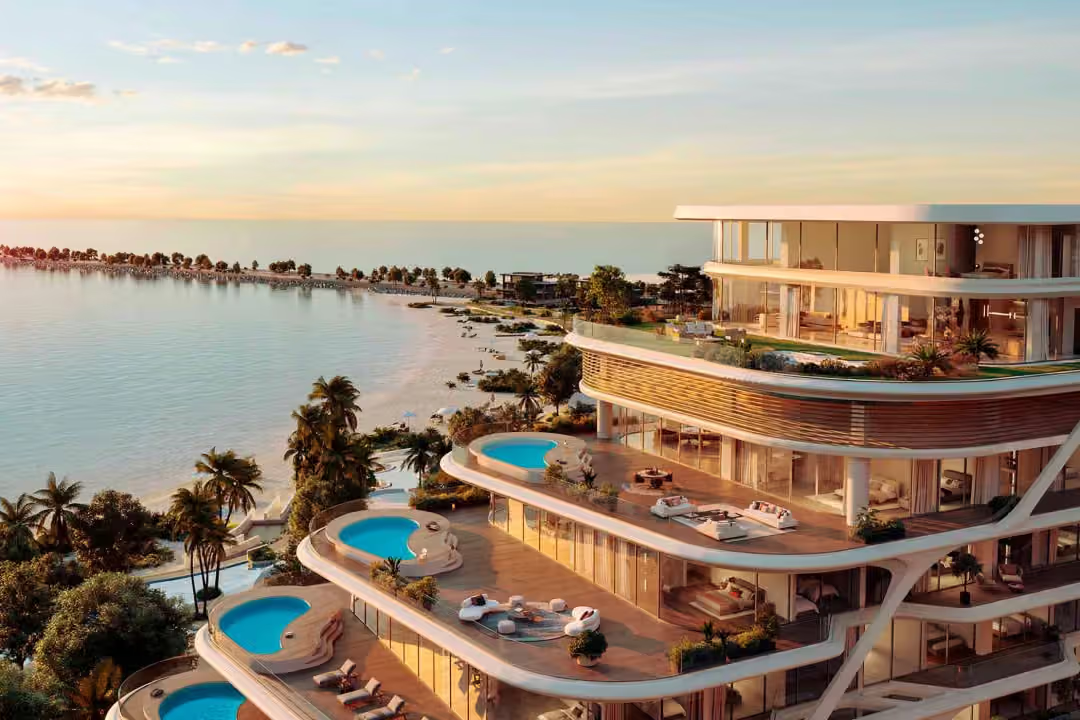
At present, residential property is approximately 25 percent cheaper in the capital than in neighboring Dubai. Buyers continually request our Dubai vs Abu Dhabi real estate comparison to understand where their funds gain maximum return. Based on figures for Q1 2026, the average price per square foot in the capital is AED 1,005 whereas the equivalent metric in Dubai is AED 1,350. When you choose to invest in Abu Dhabi vs Dubai, you are selecting between high market liquidity and higher steady yield on rental income. Allow us to dissect the exact figures and legal differences to facilitate your investment choice this year.
The Core Difference: Market Maturity vs. Untapped Potential
Dubai is a high volume trading market where master developers launch developments and sell out quickly. The secondary market here is so deep that investors can easily exit their investment if necessary.
Dubai vs Abu Dhabi Real Estate 2026: Where Should Investors Put Their Money?
Abu Dhabi functions at a significantly slower pace. Major developments such as Aldar control supply within specified freehold areas to avoid market saturation. I have found this to create a meaningful floor under capital values. Whereas you may wait a little longer for a buyer on the secondary market in the capital, the capitalised scarcity protects your asset from dips in the market.
Price per Sq.Ft and Entry Points: Where Does Your Money Go Further?
When you look at the premium waterfront sectors, the price difference is extremely stark. When buyers are considering saadiyat island vs palm jumeirah, they are usually shocked by the price gap. Ultra luxury villas in Abu Dhabi stretch from AED 8 million to AED 20 million whereas equivalent properties in Dubai will easily run you anywhere from AED 15 million to AED 50 million.
Even in terms of standard apartments, your purchasing power goes significantly further in the capital. Downtown Dubai frequently commands prices exceeding AED 3,000 per square foot while Dubai Creek Harbour averages out at AED 2,400. In Abu Dhabi, you are getting a 20 to 50 percent discount on similar luxuries, the key segment where analysing Dubai property vs Abu Dhabi is concerned.
ROI and Rental Yields: The 2026 Cash Flow Breakdown
According to the latest Bayut Annual Report, Abu Dhabi rental yields consistently exceed those in Dubai by approximately 0.5 to 1.5 percent. This is because you purchase prices are lower while the corporate rental entitlements in the capital remain incredibly strong.
A standard studio in Abu Dhabi is currently generating between 7.0 to 8.5 percent ROI. The same unit in Dubai averages 6.0 to 7.5 percent. We see similar trends with premium villa ownership. Abu Dhabi villas generate 4.0 to 5.5 percent while Dubai villas hover around 3.5 to 5.0 percent.
However, you need to consider the reality of management. While Dubai offers enormous potential for short term holiday rentals with gross yields of up to 12 percent, this requires active management and tenant turnover. Abu Dhabi is driven by long term government or corporate leases which offer boring but very stable passive income.
Stuck between investing in Dubai or Abu Dhabi? Our Kun Real Estate experts offer free WhatsApp consultations to match your investment goals with the right market.
Hidden Costs: Comparing DLD Fees, ADM Fees, and Service Charges
Transaction costs are one of the reasons why abu dhabi rental yields are given a boost. The capital charges a 2 percent ADM fee on property purchases while Dubai demands a 4 percent DLD fee. If you purchase a property for AED 2 million, purchasing in the capital saves you AED 40,000 upfront.
The paperwork systems are also vastly different. Dubai uses the Land Department network whereas Abu Dhabi relies on the Dari portal. Sometimes off-plan handovers are delayed in Abu Dhabi purely as transferring the initial title deed through Dari requires more bureaucratic clearance.
Service charges are another major factor in the uae real estate 2026. Recently, Abu Dhabi has introduced Decision 25/2025. This strict new law requires all service fees to be pre-approved by the Abu Dhabi Real Estate Centre (ADREC) and deposited into heavily monitored maintenance accounts. Dubai service charges vary widely per community and can detract from your net ROI if you buy in an area with high management friction.
Foreign Ownership and Visas: Understanding the Legal Nuances
Both emirates offer the 10-year Golden Visa for a minimum property investment of AED 2 million. Reaching this threshold is very easy in Dubai's mid-market developments. Typically in Abu Dhabi, you have to look at prime assets in order to reach the AED 2 million mark.
Dubai has recently introduced a significant visa reform in 2026. They have removed the minimum property value for the 2-year Property Investor Visa. Previously this was AED 750,000 and as long as the unit is complete and you own it outright, you qualify.
Legal jurisdiction is also of a concern when looking at Dubai property vs Abu Dhabi. If you purchase in Abu Dhabi's Al Maryah Island, your investment falls under English Common Law through the ADGM Courts. Many of our international clients prefer this to the standard local civil courts.
Our Verdict: Which Emirate Fits Your Strategy?
Major infrastructure is driving capital appreciation in the two cities. The AED 128 billion expansion of Al Maktoum Airport is pushing up values in Dubai South. Down the highway, the strict architectural rules in the Saadiyat Cultural District are driving demand for nearby villas.
If you are looking for aggressive capital growth and are able to flip off-plan units quickly, Dubai is the clear winner. If you prefer lower entry costs and stable long term corporate tenants, you should invest in abu dhabi vs dubai.
You can read our comprehensive analysis on Dubai real estate investment 2026 for more Dubai specific trends. Alternatively, explore our Abu Dhabi freehold areas guide to see where foreigners can actually buy. If residency is your primary goal, check out our breakdown of the UAE golden visa property requirements.
FAQ’s
Which is better for investment Dubai or Abu Dhabi?
It depends on your strategy. Dubai offers higher market liquidity and capital appreciation driven by rapid population growth whereas Abu Dhabi offers lower upfront purchase costs, a 2 percent ADM fee rather than 4 percent and higher long term rental yields.
Are Abu Dhabi properties cheaper than Dubai?
Yes, as a rule of thumb. Based on recent figures for Q1 2026, the average price per square foot in Abu Dhabi is roughly AED 1,005 whereas the equivalent metric in Dubai is AED 1,350. The discount is particularly pronounced when comparing luxury waterfront properties.
Can foreigners buy property in Abu Dhabi?
Yes, non-UAE nationals can buy freehold property in designated investment zones. The most popular freehold areas are Yas Island, Saadiyat Island, Al Reem Island and Al Maryah Island.
What are the average abu dhabi rental yields?
Investors can expect gross yields between 7.0 percent and 8.5 percent for studio apartments whereas premium villas generate between 4.0 percent and 5.5 percent. These figures typically outperform comparable areas in Dubai due to lower initial purchase prices.
How does saadiyat island vs palm jumeirah compare?
Palm Jumeirah is a fully mature and globally renowned ultra-luxury market which is much more expensive. Saadiyat Island offers similar beachfront luxury with greater focus on cultural institutions such as the Louvre, typically offering a 20 to 50 percent price discount compared to the Palm.
%2520Property%2520Guide%25202026.webp&w=3840&q=75&dpl=dpl_FZe4MLHty8ozjuZLR9G8PbGpSUt2)